Rhythm: Timing the Experience
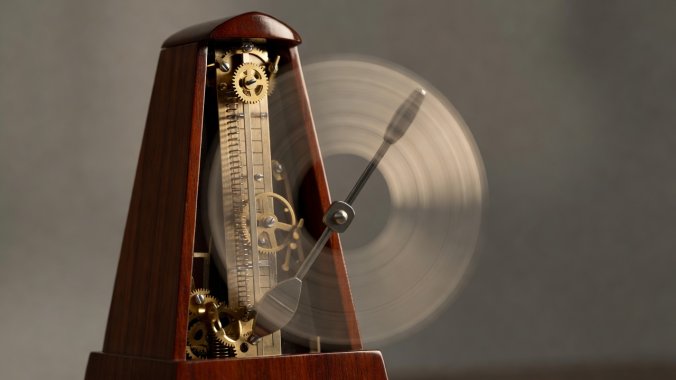
You can observe a rhythmic flashing light without moving an inch. But present that exact same interval through rhythmic drumbeats, and motor inhibition becomes difficult. Why does sound command movement?
The Auditory-Motor Highway
Unlike visual information, which routes through long occipital-temporal-frontal pathways, auditory signals connect directly into motor planning regions. Functional magnetic resonance imaging (fMRI) reveals that regular auditory pulses activate:
- The Basal Ganglia (Striatum): Critical for internally generating interval predictions and computing beat expectations.
- The Cerebellum: Responsible for sub-millisecond error correction between expected and perceived auditory transients.
- The Supplementary Motor Area (SMA): Prepares muscles for physical movement even when overt action is consciously suppressed.
This biological circuitry explains why tapping along with a song does not happen reactively after each beat. Instead, your finger lands simultaneously with or even 10 milliseconds ahead of the acoustic strike. The brain predicts the pulse rather than chasing it.
Neural Phase-Locking: The Entrained Cortex
Electroencephalography (EEG) recordings show that when an individual listens to periodic music, large populations of cortical neurons align their oscillatory phase with the tempo. This phenomenon, known as neural entrainment, occurs primarily in delta (1–4 Hz) and theta (4–8 Hz) brainwave bands—precisely matching typical musical tempi between 60 and 180 beats per minute.
"Rhythm is an evolutionary adaptation linking vocal motor coordination, social cohesion, and sustained cooperative movement. Beat perception is absent in non-vocal learning primates."
— The Cognitive Neuroscience of Music, Isabelle Peretz & Robert ZatorreThe Inverted-U of Syncopation: The Science of "Groove"
Why do listeners feel an intense urge to dance to funk or jazz, but feel less physical drive when hearing a purely rigid, robotic metronome or conversely chaotic freeform avant-garde noise? In 2014, researchers at the Danish National Research Foundation investigated this across hundreds of listeners.
They discovered an inverted-U relationship between syncopation and the urge to move:
Groove Rating vs. Metric Syncopation Complexity
When music provides a steady underlying metric grid but leaves micro-gaps on downbeats while accenting off-beats, the brain is motivated to physically complete the missing pulse through bodily motion.
Individual Variations in Beat Deafness
While the majority of humans readily track a musical pulse, congenital amusia and specific beat deafness affect roughly 3% to 4% of the population. Individuals with beat deafness can perceive differences in frequency and timbre, yet fail to synchronize motor movement to simple metronomic pulses due to reduced white matter connectivity between the auditory cortex and motor loops.