Perception: How Listening Takes Shape
The human ear does not merely register mechanical vibration like a microphone transducer. It compresses dynamic ranges, splits frequency spectra along biological ribbons, and constructs coherent sonic objects from noisy environments.
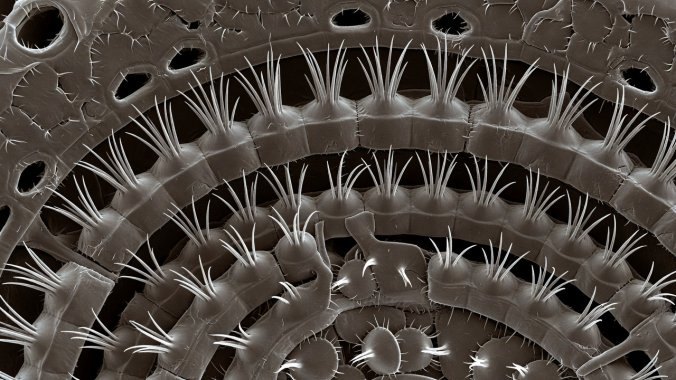
The Basilar Membrane as Biological Spectrum Analyzer
Inside the cochlea, roughly 16,000 to 20,000 hair cells rest atop the basilar membrane. This structure changes in physical stiffness and width along its 32-millimeter spiral. High-frequency tones (up to 20,000 Hz in healthy youth) produce maximum displacement near the narrow, stiff base closest to the oval window. Low frequencies (down to 20 Hz) propagate all the way to the flexible, wider apex at the helicotrema.
When stereocilia atop the inner hair cells bend against the tectorial membrane, mechanically gated ion channels open, releasing potassium and calcium ions. This depolarizes the cell, producing action potentials along the auditory nerve (cranial nerve VIII). The brain receives an intrinsically spatialized tonotopic code: which axon fires corresponds directly to the frequency heard.
"Hearing is our fastest sensory modality. While visual processing requires approximately 20 to 40 milliseconds for cortical recognition, primary auditory signals reach the brainstem in under 3 milliseconds."
— Auditory Neuroscience, Schnupp, Nelken & KingEqual Loudness and the Fletcher-Munson Curves
Human hearing sensitivity is non-linear across frequencies. Documented initially by Harvey Fletcher and Wilden A. Munson in 1933, equal-loudness contours (standardized today under ISO 226:2003) show that our ears are exceptionally sensitive between 2,000 Hz and 5,000 Hz—precisely the frequency band essential for distinguishing human vocal consonants like /s/, /t/, and /k/.
ISO 226 Sensitivity Discrepancy at Low Amplitudes (40 Phon)
At low listening levels, deep bass (below 100 Hz) becomes barely audible, while mid-frequencies remain clear. When playback volume increases, the curve flattens, which explains why music sounds warmer and more balanced at higher sound pressure levels.
Critical Bands and Auditory Masking
The basilar membrane acts as a bank of overlapping bandpass filters known as critical bands (formulated by Harvey Fletcher and refined by Eberhard Zwicker). When two distinct frequencies fall within the same critical band (roughly 100 Hz wide below 500 Hz, and 20% of center frequency higher up), they interfere mechanically, producing sensory consonance, dissonance, or masking.
If a quiet violin note is played adjacent to a loud oboe tone in the exact same critical bandwidth, the auditory nerve fibers dedicated to that zone become saturated by the louder sound. The quieter tone is masked and never perceived, even though its physical acoustic wave was present in the room.
Psychoacoustic Illusions: The Brain's Inference Machine
Because the brain acts as an inferential engine, it can be fooled by synthetic auditory stimuli:
- The Shepard Tone: Superimposing sine waves separated by octaves that move upward while smoothly fading out at high frequencies and fading in at low registers creates the illusion of an endlessly ascending pitch.
- Binaural Beats: Presenting two slightly different sine tones to each ear via isolated headphones (e.g., 400 Hz left, 410 Hz right) causes the superior olivary complex to compute an internal 10 Hz phase modulation.
- Phantom Fundamentals: When mobile phone speakers reproduce bass lines that they are physically incapable of radiating below 200 Hz, the upper harmonics trick the auditory system into hearing the non-existent bass pitch.